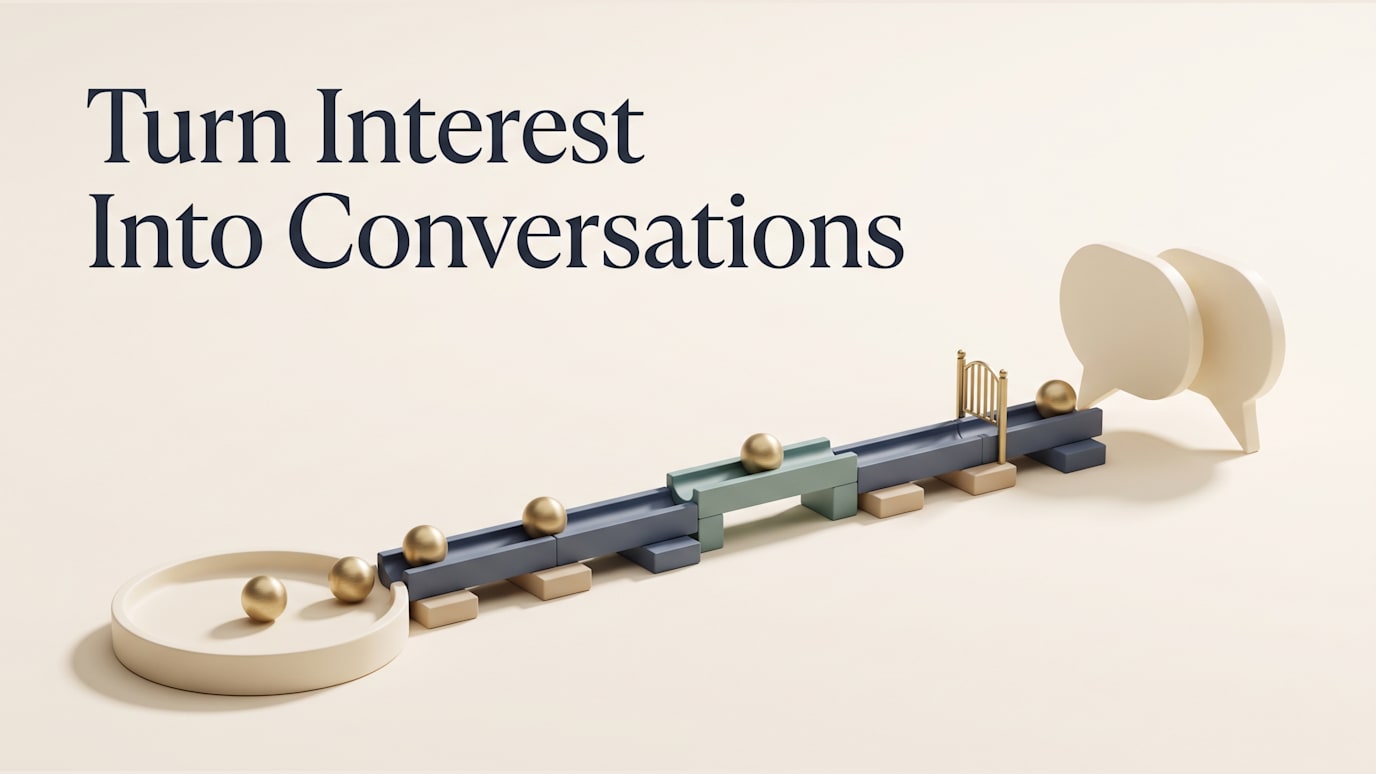
A lead rarely becomes a customer because one message was sent at the perfect time. Most need useful follow up, clear next steps and enough context for the conversation to continue properly.
Lead nurturing software can help, but only when the business knows what should happen after someone shows interest. The tool should support the relationship, not replace the thinking.
Quick answer
Lead nurturing software organizes follow up.
It works best with clear lead stages.
Your message needs business context.
Start with the next useful step.
Start With the Moment After Someone Shows Interest
The real problem is not usually getting a name into a database. It is knowing what should happen next.
Someone downloads a guide, asks a question, books a first conversation or replies to a campaign. Without a clear system, that lead can sit there while the team decides who should respond, what to say and when to follow up again.
Lead nurturing software is most useful when it turns that gap into a visible process. It can help you organize contacts, reminders, messages and handoffs, but the business still needs to decide what a good follow up looks like.
A simple starting question helps: what would make this person more ready for a real sales conversation? The answer might be education, a comparison, a reminder, a case-relevant question or a direct invitation. The software should make that next move easier to repeat.
Sort Leads by Readiness, Not Just Source
Many businesses group leads by where they came from. That helps with reporting, but it does not always help with the next message. A lead from the same form can be curious, urgent, confused or almost ready to buy.
A better nurturing setup separates source from readiness.
Lead signal | Likely need | Follow-up focus |
|---|---|---|
Early question | Clarity | Explain the problem and options |
Repeat visit | Confidence | Show relevant proof or detail |
Direct request | Action | Make the next step easy |
Keep the stages simple at first. You do not need a complex scoring model before you have a reliable follow-up habit.
A useful first structure might be:
New interest
Needs education
Comparing options
Ready for contact
Not ready yet
The point is not to label people perfectly. The point is to stop treating every lead as if they need the same message.
Give Lead Nurturing Software Better Business Context
Software can only work with the logic and information you give it. If your lead stages are vague, your offers are unclear or your brand voice changes from message to message, automation can make the inconsistency happen faster.
Before adding more tools, collect the business knowledge your follow up depends on:
Define what each lead stage means.
List the questions buyers usually ask.
Clarify your products, services and offers.
Decide what tone your follow up should use.
Identify when a human should step in.
This is where many AI and automation projects get stuck. The issue is not lack of access to technology. It is missing context.
If your team is unsure where AI or automation would create the most value first, Schedule your AI Business Assessment. The assessment is a working conversation about your business, including what is holding AI back, the two or three places it may pay for itself first and a prioritized roadmap you keep either way.
Build a Nurture Path Around One Next Step
Good nurturing does not try to say everything at once. It moves the lead from their current question to the next useful decision.
Think of the path as a short sequence:
Acknowledge the interest. Confirm the reason they reached out or engaged.
Add useful context. Answer the likely question behind the action.
Invite a small decision. Ask for a reply, booking, comparison or next detail.
Set a follow-up point. Decide when the system should prompt the next move.
For example, a professional services firm might receive a lead from a pricing question.
Starting point: “How much does this usually cost?”
Nurture action: Send a short explanation of what affects price, then ask which situation best describes the buyer.
Sample next step: “If you want, send us the option that sounds closest and we can point you toward the right starting place.”
A person still reviews the reply. The software keeps the conversation from being forgotten.
Connect Nurturing to Sales Without Forcing the Sale
Lead nurturing should make sales conversations clearer, not push every contact into the same pitch. The handoff matters.
A lead may be ready for sales when they ask about fit, timing, pricing, implementation, scope or the differences between options. Until then, helpful follow up can reduce confusion and build trust without pretending the person is ready to buy.
Takeaway: Nurturing is not a substitute for sales judgment. It is a way to make sure sales judgment is used at the right time.
If you already use a CRM, connect the nurture path to the same customer record where possible. The related article on CRM Automation Software: Turn Follow Up Into a Clearer System explains how follow-up work becomes easier when repeated steps are visible.
The goal is a cleaner conversation: what they asked, what they received and what should happen next.
Choose the First Workflow Before Choosing More Features
The easiest mistake is shopping for every feature before defining the first workflow. That leads to buying a system that looks powerful but does not match how your business actually follows up.
Choose one workflow first. For many established businesses, that might be:
New website lead to first response
Webinar attendee to sales conversation
Abandoned quote request to reminder
Past customer to repeat purchase discussion
Referral lead to qualification call
Then check whether the software supports that workflow clearly. Can your team see the lead stage? Can the right person review the message? Can you stop or change the sequence when a real conversation begins?
For a wider view of repeated follow up, see Marketing Automation: Follow Up Properly Without Hiring Anyone. The same principle applies here: automate the repeatable part, but keep the business decision visible.
Turn follow-up into an installed system
If leads are entering your business but follow up still depends on memory, scattered tools or one person holding the process together, start with the business logic. The AI Business Assessment helps identify what is holding AI back, where it may create near-term value and what roadmap makes sense for your company.
Questions Owners Ask About Lead Nurturing Systems
Do I need lead nurturing software if my team already follows up manually?
Maybe. If manual follow up is consistent, visible and timely, software may not be urgent. If leads get missed, messages vary by person or no one can see the next step, software can help turn the process into something repeatable.
What should I prepare before choosing a system?
Prepare your lead stages, common buyer questions, products and services, follow-up tone and handoff rules. These decisions matter because the software needs business context. Without that, even a capable tool can produce generic or inconsistent follow up.
Can lead nurturing software replace a salesperson?
No. It can support reminders, sequences and clearer communication, but it should not replace judgment. A salesperson still needs to understand fit, timing, objections and whether the next step is appropriate for that lead.
How is lead nurturing different from general marketing automation?
Marketing automation can cover many repeated marketing tasks. Lead nurturing is specifically about helping interested people move toward a clearer buying conversation. It focuses on timing, relevance, education and the next useful step after interest is shown.
Where does Strategic Marketer fit into this decision?
Strategic Marketer helps established businesses identify, install and activate practical AI systems around their brand, knowledge and growth priorities. The AI Business Assessment helps diagnose what is holding AI back and where AI may create the most useful near-term value.
Will the AI Business Assessment tell me which software to buy?
The assessment is described as a business working session, not a software demo. You leave with a diagnosis, the two or three places AI may pay for itself first and a prioritized roadmap. If Strategic Marketer is not the right fit, they say so.